Next week I will be presenting a paper at the American Schools of Oriental Research Annual meeting in Atlanta. The paper's title is "" Kiriath-Jearim (Deir el-'Azhar): Archaeological Investigations of a Biblical Town in the Judean Hill Country" and was co-authored by myself, Boaz Zissu, Oron Schwartz, Gabriel Barkay (my former teacher) and Alexandar Fantalkin. You can view the presentation below.
November 10, 2015


September 5, 2015
Introducing the Regnal Chronology of Judah and Israel
The Regnal Chronology of Judah: An Illustrated Guide by Chris McKinny

Now available at BiblePlaces.com in both the digital handbook and poster formats!
May 31, 2015
12 Spies - What is Truth?
“Pilate said to him, “What is truth?”” (John 18:38 ESV)
Living in both the power of the Spirit and the truth of revelation (John 1:17) has been and will remain one of the most difficult balancing acts for God's people. This is a lesson that is often forgotten despite constant examples from the Old and New Testaments. The tension between these two necessary axioms can be observed in the lives of the Patriarchs (e.g. Jacob - trusting in the truth of his father's covenant with God, but not being believing in the promise himself until he met God), Judges (e.g. Samson - desire of Philistine women vs. his role as the covenant representative), Kings (e.g. Saul vs. David), and Apostles (Peter - anyone?!?).
In my estimation, their and our greatest difficulty in living in the power of the Spirit is that we trust in the "truth" of the reality around us more than we trust in the one who provides the Spirit that enables the accomplishing of the promised, revealed truth. Significantly, this latter truth is not merely based in a whimsical, ephemeral trust, but a belief in the fact that the God who has followed through on his plan and promise, often miraculously so, will continue to act according to his promise.
I was once again stuck by this tension in the so-called "bad report" of the 10 spies.
“They (spies) brought back word to them and to all the congregation, and showed them the fruit of the land. And they told him, “We came to the land to which you sent us. It flows with milk and honey, and this is its fruit (the cluster - see below). However, the people who dwell in the land are strong, and the cities are fortified and very large. And besides, we saw the descendants of Anak there. The Amalekites dwell in the land of the Negeb. The Hittites, the Jebusites, and the Amorites dwell in the hill country. And the Canaanites dwell by the sea, and along the Jordan.” (Numbers 13:26-29 ESV)
 |
| Two Israelite spies carrying a grape cluster (eshkol) from the area of Hebron to Kadesh-barnea, in order to show the wealth of the land |
But Caleb quieted the people before Moses and said, “Let us go up at once and occupy it, for we are well able to overcome it.” Then the men who had gone up with him said, “We are not able to go up against the people, for they are stronger than we are.” So they brought to the people of Israel a bad report of the land that they had spied out, saying, “The land, through which we have gone to spy it out, is a land that devours its inhabitants, and all the people that we saw in it are of great height. And there we saw the Nephilim (the sons of Anak, who come from the Nephilim), and we seemed to ourselves like grasshoppers, and so we seemed to them.” (Numbers 13:30–33 ESV)Caleb's report, unlike that of the 10 spies, took into account the faithfulness of God as revealed through the miraculous salvation of Israel from Egypt and the ongoing physical sustenance of Israel by the direct, visible presence of God's Spirit (via the cloud/pillar of fire). Therefore, Caleb's suggested plan to attack was influenced by both the truth of the obstacles in their path (i.e. the Canaanites) and the reality of God's supremacy over these obstacles. Unlike his peers, Caleb's wisdom was "from above" (James 3:17) and his report was based on both the promise and faithfulness of God that he had witnessed with his very own eyes. This is the crux of the matter - do we trust in the physical, natural wisdom of the world and its assumed end-results or do we presently trust in the providential care and promise of God who has acted in the past and will continue to act in the future.
November 9, 2013
Yahweh Is The Danger...
The following clip is one of the greatest moments in one of the greatest dramas in TV history. Walter White's "I am the danger" speech is quite simply epic.
However, it pales in comparison with the epic statement made to Isaiah the prophet who was pulled to the side by none other than Yahweh himself who went about flipping dread on its head.
However, it pales in comparison with the epic statement made to Isaiah the prophet who was pulled to the side by none other than Yahweh himself who went about flipping dread on its head.
For Yahweh spoke thus to me with his strong hand upon me, and warned me not to walk in the way of this people, saying: “Do not call conspiracy all that this people calls conspiracy, and do not fear what they fear, nor be in dread. But the Yahweh of hosts, him you shall honor as holy. Let him be your fear, and let him be your dread. And he will become a sanctuary and a stone of offense and a rock of stumbling to both houses of Israel, a trap and a snare to the inhabitants of Jerusalem. And many shall stumble on it. They shall fall and be broken; they shall be snared and taken. (Isaiah 8:11–15 ESV)
Peter would later connect this "stone of offense" with Jesus, the messianic King, in his first epistle (1 Peter 2). The danger/dread/fear is to stumble over the Son - his dread is coming (Psalm 2:7-13).
Walter White's danger was fleeting (and fictitious). The Son's danger is all too real. Have you "kissed the son" (Psalm 2:12)?
April 27, 2013
Gehenna and the Conquered Grave
As I continue my research into the nature of Israelite child sacrifice in the Old Testament I am struck by the differences between the "Molech Cult" (e.g. Leviticus 21:1-5; Jeremiah 19) and the mysterious instances in which firstborn heirs were offered (or almost offered) as a sacrifice to Yahweh (Genesis 22; Judges 11).
The Molech sacrifice was carried out in a specific way (whole burnt offering by fire), to a specific deity (either Baal or Molech), in a specific place (Hinnom Valley, Jerusalem), for a specific purpose (divination/fortune telling), and with an unspecified type of offering (a son, a daughter or multiple children).
The rare instances of Yahwistic child sacrifice - Abraham and Isaac (almost), Jephthah and his daughter and possibly Mesha and his heir (2 Kings 3:27) were carried out in different places (Moriah, Gilead, and Kir-Haresheth), for a different purpose (obedience to and/or seeking salvation from Yahweh), and with a specified type of offering (the firstborn or beloved son of the family).
The best two texts for seeing the differences between the two practices are Jeremiah 32:33-35 and Micah 6:6-8.
Jeremiah explicitly shows that the Molech cult was against the regulations of Torah. In other places Jeremiah prophesied that the Hinnom Valley would be so filled with dead that there would not be any space to bury anyone (e.g. Jeremiah 19). This prophecy would later lead the Hinnom Valley/Cult of Molech to come to be identified with the entrance to hell itself (Talmud) and become the primary name for hell - Gehenna - in the New Testament (Matt. 5:22).
The Molech sacrifice was carried out in a specific way (whole burnt offering by fire), to a specific deity (either Baal or Molech), in a specific place (Hinnom Valley, Jerusalem), for a specific purpose (divination/fortune telling), and with an unspecified type of offering (a son, a daughter or multiple children).
The rare instances of Yahwistic child sacrifice - Abraham and Isaac (almost), Jephthah and his daughter and possibly Mesha and his heir (2 Kings 3:27) were carried out in different places (Moriah, Gilead, and Kir-Haresheth), for a different purpose (obedience to and/or seeking salvation from Yahweh), and with a specified type of offering (the firstborn or beloved son of the family).
The best two texts for seeing the differences between the two practices are Jeremiah 32:33-35 and Micah 6:6-8.
“They have turned to me their back and not their face. And though I have taught them persistently, they have not listened to receive instruction. They set up their abominations in the house that is called by my name, to defile it. They built the high places of Baal in the Valley of the Son of Hinnom, to offer up their sons and daughters to Molech, though I did not command them, nor did it enter into my mind, that they should do this abomination, to cause Judah to sin.” (Jeremiah 32:33–35 ESV)
Jeremiah explicitly shows that the Molech cult was against the regulations of Torah. In other places Jeremiah prophesied that the Hinnom Valley would be so filled with dead that there would not be any space to bury anyone (e.g. Jeremiah 19). This prophecy would later lead the Hinnom Valley/Cult of Molech to come to be identified with the entrance to hell itself (Talmud) and become the primary name for hell - Gehenna - in the New Testament (Matt. 5:22).
“With what shall I come before the LORD, and bow myself before God on high? Shall I come before him with burnt offerings, with calves a year old? Will the LORD be pleased with thousands of rams, with ten thousands of rivers of oil? Shall I give my firstborn for my transgression, the fruit of my body for the sin of my soul?” He has told you, O man, what is good; and what does the LORD require of you but to do justice, and to love kindness, and to walk humbly with your God?” (Micah 6:6–8 ESV)
Note the lesser to the greater argument - regular burnt offerings, calves a year old, a thousand rams, ten thousands of rivers of oil then the firstborn son. The point is that all of these things are acceptable for sacrifice - but even the sacrifice of a firstborn son, the highest form of sacrifice imaginable, is inadequate to please Yahweh without obedience.
The main academic reason that I point this distinction out is that so many treatments of biblical child sacrifice try to lump all of the related passages together into a monolithic system (e.g. Levenson - The Death and Resurrection of the Beloved Son 1993). Some even claim that there existed a regular practice of ritual child sacrifice (in the Molech sense) to Yahweh! This practice like many other idolatrous practices (e.g. Yahweh having a wife named Asherah) were all perfectly legitimate, they claim, until about the 8th or perhaps 6th cent. BCE in which the redactors of the Bible made the text come into conformity with their own singular (among many other strands), Yahwistic theology - effectively erasing the earlier more syncrestic, mainstream idolatrous practices (e.g. Dever and Stavrakopoulou). Besides the fact that this reeks of conspiracy theory - the texts can be better harmonized when we see distinction instead of similarity.
The main theological reason that I point this distinction is that it has powerful implications when related to the substitutionary atonement of Jesus. The death of Jesus was a sacrifice - a fulfillment of various types of Levitical sacrifices. But can it also be seen as a fulfillment of the the highest type of sacrifice - the death of the firstborn, unblemished son at the hand of the righteous Father? If for the sake of argument, we assume that what I have argued above is correct, then we have a most interesting second temple development of the two types of Israelite first temple child sacrifice.
For the Molech cult - its bloody, desecrated topheth becomes the mouth of hell itself - the lake of fire, the place of weeping and gnashing of teeth where all wicked souls reside eternally. Gehenna is its name and it receives the second death.
For the Yahwistic, firstborn, beloved son rite - its bloody, desecrated sacrifice becomes the gate of the kingdom of heaven itself, paradise, the "way" to the place of no tears and no pain where all redeemed souls reside eternally. The conquered tomb is its name, its death has no sting and it brings about the second birth.
“For God so loved the world, that He gave His only begotten Son, that whoever believes in Him shall not perish, but have eternal life.” (John 3:16 NAS95)
March 28, 2013
Our Passover Lamb on Good Friday
Lost in our theological discourses on original sin and universal guilt, our evangelical calls to the unregenerate world and our Easter services is a basic teaching of Passover - the required death of the firstborn at the hands of Yahweh.
Our theological understanding of substitutionary atonement is so vital to the Gospel Message - it underlies the basic doctrine that both ontological and presumtive sin is forgiven, covered, and atoned for through the death of a substitute - usually an animal. Jews and Christians get this for the most part - where we often miss the mark is when we believe that the death of an animal actually covers or forgives the sinner. This coverage does not come merely from the death of the animal, nor the blood of the animal - rather it is that the lifeblood of the animal stands in place of the human sinner's lifeblood. Which means that when the animal dies - God literally sees the blood of the human sinner - his justice demands that blood, but his mercy provides a substitute. When we talk about Jesus being the substitution for sinners - we are correct, but we should not forget what substitution means nor what it meant to ancient Israel.
But this is what substitution means from a composite look at all of the relevant Old Testament and New Testament connections that culminate in Jesus' death being the ultimate sacrifice. But what of Passover in specific? What of the apex of Old Testament redemptive history? How does the Passover lamb fit in with the idea of substitutionary atonement? How do we understand Paul when he tells the Corinthians that "For Christ our Passover lamb has been sacrificed" (1 Cor. 5:7)?
The tenth plague against Egypt is all about Yahweh demanding his rights over the firstborn of the families of the earth - both in Israel and Egypt. In the case of Israel his destroyer passes over the firstborn sons because when it sees the blood of the passover lambs it sees the blood of the firstborn of each family. In other words, each Israelite family had in effect already carried out Yahweh's requirement of a ritual sacrifice of the firstborn male of the family (albeit through a substitute) (Exodus 12). Whereas in the case of Egypt, there was no substitute to be found and they were forced to drink from the unbridled thirst of Yahweh's wrath through the death of their firstborns including the heir apparent to the ruler of the world (Pharaoh's own crowned prince). This event resonated through each of Israel's high feasts - Passover, Pentecost and Tabernacles, through the prophets, the psalmists, and the kings of ancient Israel. All of Old Testament theology and history ties its spiritual and physical life back to the Passover event which brought about the Exodus from Egypt.
Fast-forward 1,500 years to A.D. 33 - to the death of the firstborn son of David (via Joseph) and the firstborn son of God. By being put to death at the hands of God - Jesus' death in the Passover sense was not literally a substitution - rather it is the ultimate expression of Yahweh's destruction entering the world by cover of night and slaying the death of the firstborn of the ruler of the universe - it is Yahweh claiming his rights over the firstborn of the earth. But in another sense, it is a substitution, for by the ritual sacrifice of the Son of God comes covering for the rest of humanities firstborn sons. That is those who cover the doorpost of their hearts with the blood of Yahweh's sacrificed Son. This eternal covering provides salvation from the destroyer who will pass through the night of our lives.
But let us not forget the object of the substitution - lest the power of the sacrifice lose its full bloody power. This is where it is the most critical that we maintain the picture of the Israelite Passover. The object substituted still remains our firstborn sons! We are so quick to say that Jesus dies instead of you - his death pays for yours - this is correct, but it is not the exact picture in Passover. The first-born requirement did not change since there was a substitute - remember God viewed the blood of the lambs as the blood of the firstborn of Israel - so in his just eyes Israel has paid the price by offering its sons to Him. So then, whenever Christ dies on the cross His death stands in place of your firstborn son's death!
The stakes are high when we are talking about our own death for our own sins - they are higher still, reaching the maximum height of human understanding, whenever it is the firstborn son that is demanded as the sacrificial offering and not the individual father or the individual members of his family. So I would challenge you this Good Friday - whenever you sit with your family - either at church or at home - look at your firstborn son, your firstborn daughter, look at your firstborn brother or sister, look at your firstborn father or grandfather, look at your firstborn selves and realize that they were the cost of passing over. Yahweh demanded their life (my firstborn life, my son, Sam's firstborn life) and His justice-driven wrath against you and your family was only quenched whenever he by cover of night offered his own firstborn (Matt. 27:45-47), covered the doorpost of your heart and passed over.
Our theological understanding of substitutionary atonement is so vital to the Gospel Message - it underlies the basic doctrine that both ontological and presumtive sin is forgiven, covered, and atoned for through the death of a substitute - usually an animal. Jews and Christians get this for the most part - where we often miss the mark is when we believe that the death of an animal actually covers or forgives the sinner. This coverage does not come merely from the death of the animal, nor the blood of the animal - rather it is that the lifeblood of the animal stands in place of the human sinner's lifeblood. Which means that when the animal dies - God literally sees the blood of the human sinner - his justice demands that blood, but his mercy provides a substitute. When we talk about Jesus being the substitution for sinners - we are correct, but we should not forget what substitution means nor what it meant to ancient Israel.
But this is what substitution means from a composite look at all of the relevant Old Testament and New Testament connections that culminate in Jesus' death being the ultimate sacrifice. But what of Passover in specific? What of the apex of Old Testament redemptive history? How does the Passover lamb fit in with the idea of substitutionary atonement? How do we understand Paul when he tells the Corinthians that "For Christ our Passover lamb has been sacrificed" (1 Cor. 5:7)?
The tenth plague against Egypt is all about Yahweh demanding his rights over the firstborn of the families of the earth - both in Israel and Egypt. In the case of Israel his destroyer passes over the firstborn sons because when it sees the blood of the passover lambs it sees the blood of the firstborn of each family. In other words, each Israelite family had in effect already carried out Yahweh's requirement of a ritual sacrifice of the firstborn male of the family (albeit through a substitute) (Exodus 12). Whereas in the case of Egypt, there was no substitute to be found and they were forced to drink from the unbridled thirst of Yahweh's wrath through the death of their firstborns including the heir apparent to the ruler of the world (Pharaoh's own crowned prince). This event resonated through each of Israel's high feasts - Passover, Pentecost and Tabernacles, through the prophets, the psalmists, and the kings of ancient Israel. All of Old Testament theology and history ties its spiritual and physical life back to the Passover event which brought about the Exodus from Egypt.
Fast-forward 1,500 years to A.D. 33 - to the death of the firstborn son of David (via Joseph) and the firstborn son of God. By being put to death at the hands of God - Jesus' death in the Passover sense was not literally a substitution - rather it is the ultimate expression of Yahweh's destruction entering the world by cover of night and slaying the death of the firstborn of the ruler of the universe - it is Yahweh claiming his rights over the firstborn of the earth. But in another sense, it is a substitution, for by the ritual sacrifice of the Son of God comes covering for the rest of humanities firstborn sons. That is those who cover the doorpost of their hearts with the blood of Yahweh's sacrificed Son. This eternal covering provides salvation from the destroyer who will pass through the night of our lives.
But let us not forget the object of the substitution - lest the power of the sacrifice lose its full bloody power. This is where it is the most critical that we maintain the picture of the Israelite Passover. The object substituted still remains our firstborn sons! We are so quick to say that Jesus dies instead of you - his death pays for yours - this is correct, but it is not the exact picture in Passover. The first-born requirement did not change since there was a substitute - remember God viewed the blood of the lambs as the blood of the firstborn of Israel - so in his just eyes Israel has paid the price by offering its sons to Him. So then, whenever Christ dies on the cross His death stands in place of your firstborn son's death!
The stakes are high when we are talking about our own death for our own sins - they are higher still, reaching the maximum height of human understanding, whenever it is the firstborn son that is demanded as the sacrificial offering and not the individual father or the individual members of his family. So I would challenge you this Good Friday - whenever you sit with your family - either at church or at home - look at your firstborn son, your firstborn daughter, look at your firstborn brother or sister, look at your firstborn father or grandfather, look at your firstborn selves and realize that they were the cost of passing over. Yahweh demanded their life (my firstborn life, my son, Sam's firstborn life) and His justice-driven wrath against you and your family was only quenched whenever he by cover of night offered his own firstborn (Matt. 27:45-47), covered the doorpost of your heart and passed over.
February 26, 2013
Sons of Skepticism
The following quote comes from John Oswalt's excellent book, The Bible Among the Myths. The book primarily deals with the intersection between the worldview of the bible and the worldview of the pagan ancient Near East - most notably pointing out the difference between the pagan idea of material continuity/pantheism versus the biblical idea of transcendence. In the following quote, Oswalt rather nicely illustrates the stakes of denying the historical reality of the bible, while trying to hold onto some sort of faith (emphasis mine).
I do not mean to suggest that the only persons who have come to doubt the historical veracity of the Old Testament are those who begin with a bias in that direction. Many honest investigators who began with the opposite bias have come to that conclusion. I only mean to say that if we begin with the bias against its veracity, it is virtually certain that we wil come to that conclusion. Nor do I mean to say that reaching that conclusion one must necessarily abandon faith. However, it is my observation that such a faith, hanging in the air, as it were, is virtually incapable of reproducing itself. Our students tend to be more logical than we. (Oswalt 2009: 16)
February 25, 2013
The Shadow of Death - Psalm 107:10-16
Note: for seeing the text, hover over the reference to read the text. Also, remember each time you read "LORD" in the Old Testament/Hebrew Bible English Bible that is actually the divine name YHWH or Yahweh - the actual name of God. When you read "Lord" that is his title (Hebrew - Adonai).
Psalm 107:10-16 is very similar to Isaiah 9:1-2 (and is probably playing off of it), which Matthew uses to illustrate the reason for Jesus' coming to Galilee for his ministry (Matt. 4:12-16). Very interestingly, these three groups of people each experienced different shades of the shadow of death.
1.) Isaiah's audience = the shadow of the Neo-Assyrian War Machine, which would ultimately lay waste to kingdom of Israel in two waves 732 BCE (Tigaleth Pilaser III) directed at conquering and deporting Transjordan and Galilee, including Zebulun and Naphtali and 722 BCE (Shalmaneser V/Sargon II) directed at wiping Israel/Samaria off the map and placing it under direct Assyrian rule.
2.) Psalm's audience = the remnant of Judah's inhabitants who had been exiled to Babylon by Nebuchadnezzar in 586 BCE. They were at times in the very "shadow of death" (e.g. Esther/Purim which just so happens to be today :) ) and in need of deliverance from their Persian captivators.
3.) Matthew's audience = the remnant of Judah/Levi that had at some point returned to the geographical area of Zebulun and Naphtali (i.e. "the land of the Shadow of Death") after one of the returns from Persia (ca. 539 BCE, 516 BCE and 458 BCE). This group which included Jesus' maternal family was for a time, independent from a foreign oppressor and was ruled by the Davidic Hasmonean Dynasty (167-63 BCE), however, that independence was brought to an end by Pompeii who brought Galilee, Samaria and Judea under the patronage of the emerging Roman Empire in 63 BCE.
 |
| The region of the "Shadow of Death", copyright Bill Schlegel Satellite Bible Atlas |
Three different oppressions - Assyrian, Persian, and Roman. Each writer expresses that deliverance has only one source, Yahweh.
In the words of the Psalmist:
“Then they cried to the LORD in their trouble, and he delivered them from their distress. He brought them out of darkness and the shadow of death, and burst their bonds apart. Let them thank the LORD for his steadfast love (Hebrew hesed - literally covenant-keeping faithfulness), for his wondrous works to the children of man! For he shatters the doors of bronze and cuts in two the bars of iron.” (Psalms 107:13–16 ESV)
In the words of Isaiah the prophet and by citing the beginning of the passage,* Matthew:
“For to us a child is born, to us a son is given; and the government shall be upon his shoulder, and his name shall be called Wonderful Counselor, Mighty God, Everlasting Father, Prince of Peace. Of the increase of his government and of peace there will be no end, on the throne of David and over his kingdom, to establish it and to uphold it with justice and with righteousness from this time forth and forevermore. The zeal of the LORD of hosts will do this.” (Isaiah 9:6–7 ESV)This child would/will be the one who vanquishes the darkness with his light (John 1:1-5), who burst open the bonds of the prisoners, and who shows "covenant-keeping faithfulness" both to who his chosen physical offspring (Abrahamic and Mosaic covenant) and his chosen spiritual offspring (Jeremiah's New Covenant - Jer. 31:31-33).
The Psalmist gives us the best response to such good news:
“Oh give thanks to the LORD, for he is good, for his steadfast love endures forever! Let the redeemed of the LORD say so, whom he has redeemed from trouble and gathered in from the lands, from the east and from the west, from the north and from the south.” (Psalms 107:1–3 ESV)
Next time we will look at the relationship of Psalm 107:23-32 to Jesus' calming of the Sea of Galilee (e.g. Matt. 8:23-27).
*New Testament writers that cite a portion of an Old Testament passage are bringing to bear the entirety of the passage that they are quoting and not just the specific references that they include in their writing. Therefore, when Matthew quotes Isaiah 9:1-2 in Matthew 4:12-16 he is directing his audience to the entire passage - that is Isaiah 9:1-7. This is an important point to remember and can be helpful in understanding some seemingly inexplicable passages (e.g. Luke 4:16-30.)
*New Testament writers that cite a portion of an Old Testament passage are bringing to bear the entirety of the passage that they are quoting and not just the specific references that they include in their writing. Therefore, when Matthew quotes Isaiah 9:1-2 in Matthew 4:12-16 he is directing his audience to the entire passage - that is Isaiah 9:1-7. This is an important point to remember and can be helpful in understanding some seemingly inexplicable passages (e.g. Luke 4:16-30.)
February 18, 2013
Isaac and Jesus - Related?
Are these passages related to one another?
“And Isaac said to his father Abraham, “My father!” And he said, “Here I am, my son.” He said, “Behold, the fire and the wood, but where is the lamb for a burnt offering?” Abraham said, “God will provide for himself the lamb for a burnt offering, my son.” So they went both of them together.”(Genesis 22:7–8 ESV)
“he (Christ) humbled himself by becoming obedient to the point of death, even death on a cross”(Philippians 2:8 ESV)
Textual and traditional evidence points to Isaac being the age of either 26 or 37 at the time of his "binding." Translation: he was old enough to know that you don't offer a burnt sacrifice without a lamb.
The suffering, beloved son humbles himself...
February 16, 2013
Straining out a gnat...
“Woe to you, scribes and Pharisees, hypocrites! For you tithe mint and dill and cumin, and have neglected the weightier matters of the law: justice and mercy and faithfulness. These you ought to have done, without neglecting the others. You blind guides, straining out a gnat and swallowing a camel!”
(Matthew 23:23–24 ESV)
Here is the latest version of "straining out a gnat" in America's abortion debate. Lauren Enriquez writes:
Another story out of Houston just this week ended more tragically. An unidentified woman was hospitalized due to major hemorrhaging following what was revealed to be a self-induced abortion. First she told authorities that her baby was wrapped in a blanket in the dumpster, prompting a massive search of her apartment complex. The woman later admitted that the child was in a different location, where it was subsequently recovered by police.
The double-standard in this unbelievably sad story is that it is only an autopsy of the child’s body that will indicate whether or not this mother can be charged with a crime. Paraphrasing a Houston Police Dpt sergeant, the Houston Chronicle said, “no charges have been filed in the case because it is unknown whether the fetus was alive or viable at the time of birth.”
That means, if the child was born dead (following a ‘successful’ abortion), then the mother cannot be charged with a crime, since abortion (which, by definition, means that a dead baby was delivered after being killed in utero) is legal. If, however, it was born alive (the approximate age of the child, between 20-25 weeks, suggests that viability was a definite possibility), then the mother could be charged with a crime.
The takeaway: Either way, the baby was murdered by its mother; her intention was the same all along, but the question of where the child died—in utero or out—will determine whether or not a crime was committed.
It’s time to hold the pro-abortion community accountable for the convenient lapses in logic that propagate laws based on shoddy reasoning.
HT: Tim Challies
February 8, 2013
The Aleppo Codex by Matti Friedman
Due to the combination of my 1 1/2 year-old son's horrifyingly bad case of jet lag, my wife's strep throat and my own jet lag, I was able to make some headway this last month on my new year's resolution "to read more books outside of my normal reading area (biblical archaeology, ancient Near East, historical fiction, science fiction)." This pursuit started with a fascinating book called "The Aleppo Codex" by Matti Friedman.
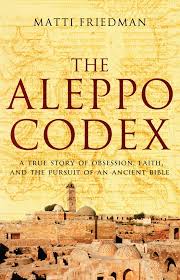 I briefly met Friedman this past summer as he came and excavated for a day in my area at Tell es-Safi/Gath - he provided an excellent report that our director, Aren Maeir, referred to as "outstanding." This judgment certainly applies to Friedman's book, "The Aleppo Codex." The subject of his book - the Aleppo Codex - is the saga of the most ancient (around 930 AD/CE) complete text of the Hebrew Bible/Old Testament.
To put that in perspective we must understand that every single English Bible from the King James' Version up until the mid-20th century did not have the earliest complete source of the Old Testament at its disposal when translating the Bible into English. 1947, is probably the most significant year for for textual criticism as both the Dead Sea Scrolls and the Aleppo Codex began their respective journeys to Jerusalem and eventually to the ends of the earth (modern translations). For the basics on the Aleppo Codex and its significance see here.
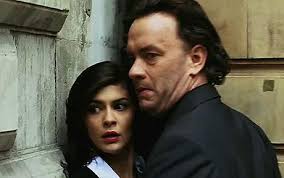 The unique significance of the Aleppo Codex is shown throughout the book and underscores the fascinating controversies within its saga and travels from Tiberias to Aleppo to Jerusalem (well, at least 60% of it). This true story is exceptionally well researched and written, those were the things Friedman could control. What he could not control was the mysterious twists and amazing turns in the story of the Aleppo Codex. If this were adapted as a TV drama for AMC or HBO it would have great ratings, but people (e.g. my dad) would call it "too unrealistic." That's what is amazing about this account - the events really occurred! It is a real life version of a Dan Brown thriller without the bad theology and terrible Tom Hank's locks. "The Aleppo Codex" is well-worth your time and will hold your attention to the end.
To put that in perspective we must understand that every single English Bible from the King James' Version up until the mid-20th century did not have the earliest complete source of the Old Testament at its disposal when translating the Bible into English. 1947, is probably the most significant year for for textual criticism as both the Dead Sea Scrolls and the Aleppo Codex began their respective journeys to Jerusalem and eventually to the ends of the earth (modern translations). For the basics on the Aleppo Codex and its significance see here.
January 29, 2013
Don't You Want to Thank Someone - Andrew Peterson
Despite the small amount of views on Youtube - if I could only choose one song to be sung at my funeral - I would choose this one.
Lyrics:
Can't you feel it in your bones
Something isn't right here
Something that you've always known
But you don't know why
'Cause every time the sun goes down
We face another night here
Waiting for the world to spin around
Just to survive
But when you see the morning sun
Burning through a silver mist
Don't you want to thank someone?
Don't you want to thank someone for this?
Don't you ever wonder why
In spite of all that's wrong here
There's still so much that goes so right
And beauty abounds?
'Cause sometimes when you walk outside
The air is full of song here
The thunder rolls and the baby sighs
And the rain comes down
And when you see the spring has come
And it warms you like a mother's kiss
Don't you want to thank someone?
Don't you want to thank someone for this?
I used to be a little boy
As golden as a sunrise
Breaking over Illinois
When the corn was tall
Yeah, but every little boy grows up
And he's haunted by the heart that died
Longing for the world that was
Before the Fall
Oh, but then forgiveness comes
A grace that I cannot resist
And I just want to thank someone
I just want to thank someone for this
Now I can see the world is charged
It's glimmering with promises
Written in a script of stars
Dripping from prophets' lips
But still, my thirst is never slaked
I am hounded by a restlessness
Eaten by this endless ache
But still I will give thanks for this
'Cause I can see it in the seas of wheat
I can feel it when the horses run
It's howling in the snowy peaks
It's blazing in the midnight sun
Just behind a veil of wind
A million angels waiting in the wings
A swirling storm of cherubim
Making ready for the Reckoning
Oh, how long, how long?
Oh, sing on, sing on
And when the world is new again
And the children of the King
Are ancient in their youth again
Maybe it's a better thing
A better thing
To be more than merely innocent
But to be broken then redeemed by love
Maybe this old world is bent
But it's waking up
And I'm waking up
'Cause I can hear the voice of one
He's crying in the wilderness
"Make ready for the Kingdom Come"
Don't you want to thank someone for this?
Hallelujah! Hallelujah!
Hallalujah! Hallelujah!
Come back soon
Come back soon
Words and Music by Andrew Peterson / AP: vocals Jill Phillips: vocals Ben Shive: piano, keys, vocals, string arrangement Andy Gullahorn: vocals Cason Cooley: piano, electric guitar, tambourine, marimba Tyler Burkum: electric guitar Matt Pierson: bass Will Sayles: drums Claire Indie: cello Zack Casebolt: violin ©2012 Jakedog Music (adm by Music Services) (ASCAP)
June 2, 2012
Knowing More than Luther...
I could not agree more with the following statement from Paul Maier's "In the Fulness of Time".
“Any person today can, if he or she wishes, know more about Jesus and the origins of Christianity than would have been possible for the greatest names in Church history, including Calvin, Luther, Thomas Aquinas, or even Augustine.” (Maier 1991:xvi)
Natural conclusion - Come to Israel see the places Luther only read about!
To you - Hazor, Bethlehem, Capernaum, etc. can be more than place names - you can see them, touch them and visualize the narrative that occurred in and around them!
Natural conclusion - Come to Israel see the places Luther only read about!
To you - Hazor, Bethlehem, Capernaum, etc. can be more than place names - you can see them, touch them and visualize the narrative that occurred in and around them!
Miracles and Jericho
Many evangelical biblical scholars recognize the three main periods of miraculous events in the biblical narrative - 1.) The Exodus/Conquest (Exodus-Joshua); 2.) The Ministries of Elijah/Elisha (1-2 Kings ca. 870-800 BCE); 3.) The Ministry of Jesus/Early Church (Gospels-Acts ca. 30-70 CE). Of course there are other supernatural events in Scripture that fall outside of these three specific periods - most of those are acts of divine power without a clear "sign" (e.g. Uzzah and the Ark ca. 980 BCE, Jonathan/Armor-bearer wiping out the Philistine Garrison @ Michmash ca. 1030 BCE, etc.).
Interestingly - Jericho is the only city specifically cited as being the location of a miracle in all three "miracle" periods.
While this is not earth-shattering news it does clearly show that Jericho was a prominent fixture on an important east-west route for over 1500 years of redemptive history.
Interestingly - Jericho is the only city specifically cited as being the location of a miracle in all three "miracle" periods.
- Exodus/Conquest - The miraculous destruction of Jericho's walls (Joshua 5-6)
- The Ministries of Elijah/Elisha - Elijah taken to heaven; Elisha turning poison water into sweet water (2 Kings 2); and Elisha making an axe-head float near the Jordan (2 Kings 6 - probably near Jericho "sons of the prophets")
- The Ministry of Jesus - Jesus healing blind Bartimaeus (and associate - see Matt. 20:30) (Mark 10:46-52)
While this is not earth-shattering news it does clearly show that Jericho was a prominent fixture on an important east-west route for over 1500 years of redemptive history.
March 2, 2012
Jonah, Jesus and the Talpiot Tomb
I just posted on the parallels between Jesus and Jonah over at the BiblePlaces blog - check it out here.
January 13, 2012
Unparalleled: Samuel vs. Caiaphas
Though separated by a thousand years - Samuel and Caiaiphas were placed in quite similar situations - both lived during the rule of a foreign oppressor (Philistia and Rome), both were charged with leading God's people spiritually and politically, and both were faced with the difficult prospects of a paradigm-shifting power move on the part of a young king who resonated strongly with a nationalistic, king-hungry, beleaguered populace. Despite these similarities these two men responded radically differently when they encountered Yahweh's Anointed. Notice the sharp distinction in ideology and practice between two of Israel's most famous (and infamous) leaders.
Caiaphas' response to the pleas for a king and encountering Jesus:
Caiaphas' response to the pleas for a king and encountering Jesus:
“So the chief priests and the Pharisees gathered the council and said, “What are we to do? For this man performs many signs. If we let him go on like this, everyone will believe in him, and the Romans will come and take away both our place and our nation.” But one of them, Caiaphas, who was high priest that year, said to them, “You know nothing at all. Nor do you understand that it is better for you that one man should die for the people, not that the whole nation should perish.” He did not say this of his own accord, but being high priest that year he prophesied that Jesus would die for the nation, and not for the nation only, but also to gather into one the children of God who are scattered abroad. So from that day on they made plans to put him to death.” (John 11:47–53 ESV)Samuel's response to the pleas for a king (Saul) and encountering David:
“Then all the elders of Israel gathered together and came to Samuel at Ramah and said to him, “Behold, you are old and your sons do not walk in your ways. Now appoint for us a king to judge us like all the nations.” But the thing displeased Samuel when they said, “Give us a king to judge us.” And Samuel prayed to the LORD. And the LORD said to Samuel, “Obey the voice of the people in all that they say to you, for they have not rejected you, but they have rejected me from being king over them. According to all the deeds that they have done, from the day I brought them up out of Egypt even to this day, forsaking me and serving other gods, so they are also doing to you. Now then, obey their voice; only you shall solemnly warn them and show them the ways of the king who shall reign over them.” (1 Samuel 8:4–9 ESV)What do we do when we encounter the LORD's Anointed? Do we ask for God's direction and follow his command to bend the knee and pledge Him fealty? Or do we look to hold on to our "place" by attacking, demeaning, or neglecting the true King? Let us make the "Anointed" both Lord and King of our "nation" - despite how it affects our own standing among our peers.
“But the LORD said to Samuel, “Do not look on his appearance or on the height of his stature, because I have rejected him. For the LORD sees not as man sees: man looks on the outward appearance, but the LORD looks on the heart.” Then Jesse called Abinadab and made him pass before Samuel. And he said, “Neither has the LORD chosen this one.” Then Jesse made Shammah pass by. And he said, “Neither has the LORD chosen this one.” And Jesse made seven of his sons pass before Samuel. And Samuel said to Jesse, “The LORD has not chosen these.” Then Samuel said to Jesse, “Are all your sons here?” And he said, “There remains yet the youngest, but behold, he is keeping the sheep.” And Samuel said to Jesse, “Send and get him, for we will not sit down till he comes here.” And he sent and brought him in. Now he was ruddy and had beautiful eyes and was handsome. And the LORD said, “Arise, anoint him, for this is he.” Then Samuel took the horn of oil and anointed him in the midst of his brothers. And the Spirit of the LORD rushed upon David from that day forward. And Samuel rose up and went to Ramah.” (1 Samuel 16:7–13 ESV)
October 27, 2011
The Shadow of our Homeland
In researching for a paper on the explorations of Tel Burna for next month's ASOR conference - I came across this quote from 19th cent. French explorer Victor Guerin. I find it to be quite insightful (although I doubt that I share the following with my audience).
Because the CITY is so overwhelmingly satisfying that its shadow towns' sweetness are oft able to overcome the bitterness of this world's cup. So we drink deeply with hopes of tasting the delightful amidst the acrid. But when the bitterness leads sway our hope in the semi-sweet is shaken.
Why does this cup not quench?
“When you first set eyes on the Holy Land, it is immediately engraved in your soul with the same power as the land in which you were born and spent your childhood. It is indeed one of the first lands we heard of; from an early age we all learned the eternal words of memory connected with it, and thus it became like a mysterious common homeland of our childhood.” (Guerin 1865)
Several interesting points could be made about this quote, but I will limit it to one.
The reason why the Holy Land provides its visitors with a "mysterious engraving" upon their souls is that it beckons its viewers to glimpse the shadow of the past that we both identify with and belong to. However, it does not stop there - the shadow of the past is merely another shadow cast by the real thing. You might ask, what is the real thing?
“By faith he went to live in the land of promise, as in a foreign land, living in tents with Isaac and Jacob, heirs with him of the same promise. For he was looking forward to the city that has foundations, whose designer and builder is God.” (Hebrews 11:9–10 ESV)The real thing is the CITY - Abraham and Isaac lived in tents waiting for the day that the might glimpse the CITY. A thousand years later a shadow of the city was built by a son of Abraham - David, but this was not the CITY as the following verses make clear.
“These all died in faith, not having received the things promised, but having seen them and greeted them from afar, and having acknowledged that they were strangers and exiles on the earth. For people who speak thus make it clear that they are seeking a homeland. If they had been thinking of that land from which they had gone out, they would have had opportunity to return.” (Hebrews 11:13–15 ESV)Long-casted are the shadows of the CITY - reaching our shores with their glimpses of pleasures and hope surrounded by a dreadful present. So why do we cling to the pleasures that lace the dread?
Because the CITY is so overwhelmingly satisfying that its shadow towns' sweetness are oft able to overcome the bitterness of this world's cup. So we drink deeply with hopes of tasting the delightful amidst the acrid. But when the bitterness leads sway our hope in the semi-sweet is shaken.
Why does this cup not quench?
“Jesus said to her, “Everyone who drinks of this water will be thirsty again, but whoever drinks of the water that I will give him will never be thirsty again. The water that I will give him will become in him a spring of water welling up to eternal life.”” (John 4:13–14 ESV)
King Jesus offers citizenship into the CITY, not a shadow town (the Holy Land), not a shadow of a shadow town (our homeland), but the real, genuine shadow-casting CITY.
Do we drink deep of its all-satisfying cup? Give ourselves over to the will of the CITY KING?
Or
Are we content with our shadowy, twice-brewed, lukewarm mug of insufficiency - so that we might be the overlord of our shadow shanties?
“And he carried me away in the Spirit to a great, high mountain, and showed me the holy city Jerusalem coming down out of heaven from God, having the glory of God, its radiance like a most rare jewel, like a jasper, clear as crystal. It had a great, high wall, with twelve gates, and at the gates twelve angels, and on the gates the names of the twelve tribes of the sons of Israel were inscribed— on the east three gates, on the north three gates, on the south three gates, and on the west three gates. And the wall of the city had twelve foundations (Hebrews 11:10), and on them were the twelve names of the twelve apostles of the Lamb...
And I saw no temple in the city, for its temple is the Lord God the Almighty and the Lamb. And the city has no need of sun or moon to shine on it, for the glory of God gives it light, and its lamp is the Lamb. By its light will the nations walk, and the kings of the earth will bring their glory into it, and its gates will never be shut by day—and there will be no night there.” (Revelation 21:10–25 ESV)
July 19, 2011
Dung vs. Oil
In the ancient world there were two main types of fuel - dung and olive oil. Dung is a by-product of the animal and is primarily used for cooking - olive oil is a by-product of the olive and is primarily used for lighting a lamp. With these two fuels in mind the writer of Kings draws a striking picture that illuminates God's feelings toward the lines of David and Jeroboam (son of Nebat).
The dung line -
“I (Yahwh) will cut off from Jeroboam every male, both bond and free in Israel, and will burn up the house of Jeroboam, as a man burns up dung until it is all gone.” (1 Kings 14:10 ESV)
Result:
Unrelenting syncretism (mixing Yahwism with Canaanite idolatry) and immediate destruction of Jeroboam's line (death of his son - Nadab - 1 Kings 15:25-27).
The olive oil line -
“Nevertheless, for David’s sake the LORD his God gave him a lamp in Jerusalem, setting up his son after him, and establishing Jerusalem.” (1 Kings 15:4 ESV)
Result:
Continuation of Davidic line until 586 BCE (destruction of Judah) - resulting in the first return of the King (Matthew 1) and to be culminated in the final return of the warrior king - Jesus (Zechariah 14:4-5).
The dung line -
“I (Yahwh) will cut off from Jeroboam every male, both bond and free in Israel, and will burn up the house of Jeroboam, as a man burns up dung until it is all gone.” (1 Kings 14:10 ESV)
Result:
Unrelenting syncretism (mixing Yahwism with Canaanite idolatry) and immediate destruction of Jeroboam's line (death of his son - Nadab - 1 Kings 15:25-27).
The olive oil line -
“Nevertheless, for David’s sake the LORD his God gave him a lamp in Jerusalem, setting up his son after him, and establishing Jerusalem.” (1 Kings 15:4 ESV)
Result:
Continuation of Davidic line until 586 BCE (destruction of Judah) - resulting in the first return of the King (Matthew 1) and to be culminated in the final return of the warrior king - Jesus (Zechariah 14:4-5).
June 16, 2011
June 4, 2011
The Setting of The Song of Moses - Deuteronomy 32
Tomorrow I am preaching at my church, Country Bible Church in Taft, TX. My text will be Deuteronomy 32 - aka the song of Moses (Deut. 31:30). As I have repeatedly read through this chapter of Scripture I have been struck by how specifically the flora, fauna and overall geographical setting of the passage matches that of Israel's contemporaneous political positioning. Namely - their encampment in the "Plains of Moab" after conquering the western side of the Transjordan hill country (outlined green on map) from Moab to Bashan (Deut. 32:14). This specific location looks over the general area of Sodom and Gomorrah (Deut. 32:32) and became the spot where the great leader, Moses, gave up the ghost (Deut. 34 - Mt. Nebo). To illuminate this point it is vital to establish both what is mentioned and what is not mentioned.

Mentioned: desert land, waste of the wilderness, eagle, high places of the land, produce of the field, honey from the rock, oil from the flinty rock, curds from the herd, milk from the flock, fat of lambs, rams of Bashan (Golan Heights), very finest of the wheat, foaming wine, blood of the grape, vine of Sodom, fields of Gomorrah, grapes of poison, bitter clusters, poison of serpents, venom of asps.
Not mentioned: no city west of the Jordan, hill country, trees, wine from coast or CisJordan hill country (wine mentioned is explicitly from Bashan and Sodom and Gomorrah), fox, bears, lions, non-carrion birds.
If this passage was created by a Judean living in the late 7th cent. BCE (or anytime after 1400 BCE for that matter) then he certainly had a keen eye for deceptive detail and a flair for illusory authenticity.

Mentioned: desert land, waste of the wilderness, eagle, high places of the land, produce of the field, honey from the rock, oil from the flinty rock, curds from the herd, milk from the flock, fat of lambs, rams of Bashan (Golan Heights), very finest of the wheat, foaming wine, blood of the grape, vine of Sodom, fields of Gomorrah, grapes of poison, bitter clusters, poison of serpents, venom of asps.
Not mentioned: no city west of the Jordan, hill country, trees, wine from coast or CisJordan hill country (wine mentioned is explicitly from Bashan and Sodom and Gomorrah), fox, bears, lions, non-carrion birds.
If this passage was created by a Judean living in the late 7th cent. BCE (or anytime after 1400 BCE for that matter) then he certainly had a keen eye for deceptive detail and a flair for illusory authenticity.
Subscribe to:
Posts (Atom)